
NEA Releases 3-Year Energy Conservation and Carbon Reduction Action Plan, Providing Strong Policy Support for the Entire Hydrogen Value Chain
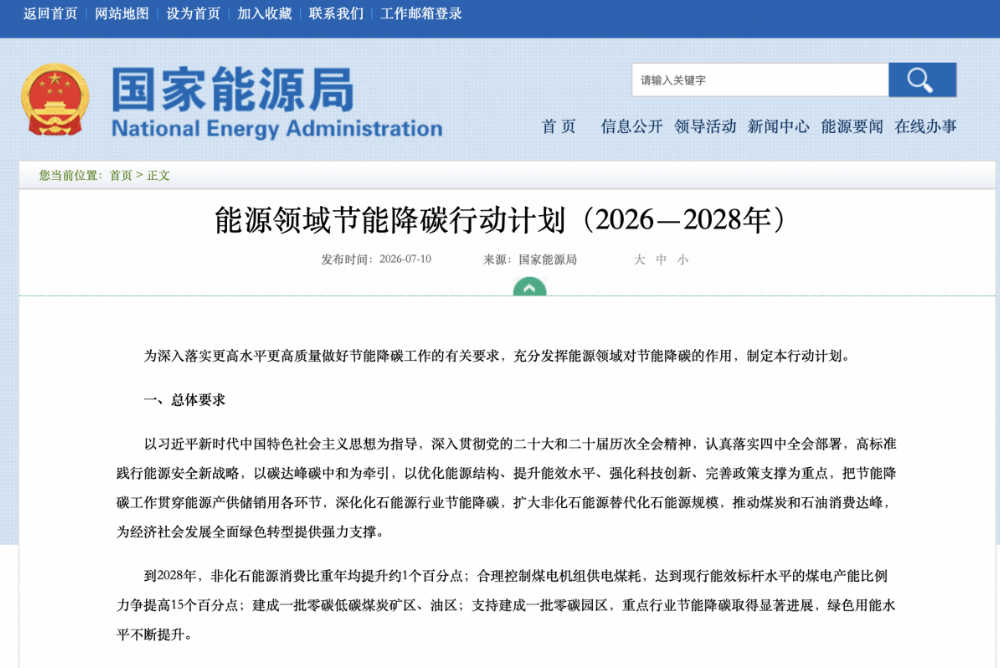
On July 10, 2026, the National Energy Administration (NEA) officially issued the "Action Plan for Energy Conservation and Carbon Reduction in the Energy Sector (2026–2028)", outlining the roadmap for energy conservation and carbon reduction over the next three years. Notably, as a pivotal force driving the replacement of fossil fuels, hydrogen energy has secured substantial policy support across multiple dimensions—including technological innovation, consumption-side substitution, and carbon emissions accounting—injecting strong momentum into the hydrogen sector and its upstream and downstream supply chains.
Technological Breakthroughs: Policy Backing for the Full Production-Storage-Transport-Utilization Chain
In the section "Developing Low-Carbon, Zero-Carbon, and Negative-Carbon Frontier Technologies," the Action Plan explicitly proposes to tackle key technologies for flexible, efficient hydrogen production from wind and solar power, as well as large-scale, safe hydrogen storage. It also emphasizes breakthroughs in core technologies such as green hydrogen synthesis catalysis, low-carbon synthesis processes, and long-distance storage and transportation. This underscores that the state has clearly defined the direction for technological breakthroughs across the entire hydrogen value chain, from upstream production to midstream storage and transportation.
Consumption-Side Substitution: Deep Transformation Ahead for the Petrochemical and Refining Industries
Regarding "Accelerating the Upgrade and Transformation of the Oil Refining and Coal-to-Liquids/Gas Industries," the Action Plan encourages relevant projects to implement large-scale substitution using green electricity and green hydrogen, gradually reducing the utilization of hydrogen produced from fossil fuels, while deploying large-scale Carbon Capture, Utilization, and Storage (CCUS). This indicates that traditional fossil-fuel-based hydrogen production in the petrochemical industry will face incremental restrictions, fully opening up market space for green hydrogen substitution.
Carbon Emissions Accounting: Hydrogen Formally Integrated into the National Statistical System
Furthermore, the Action Plan clarifies for the first time that "hydrogen production, storage, and transportation" will be included in the scope of carbon emissions statistics and accounting, aligning it with sectors such as coal mining, oil and gas exploration and development, and oil refining. This marks the first time hydrogen energy has been integrated into the national-level carbon emissions statistical and accounting framework, establishing the institutional foundation for the subsequent monetization of green hydrogen's carbon value.
Overall, this Action Plan provides clear policy expectations for the commercial-scale development of the hydrogen industry during the 15th Five-Year Plan period, while charting the course for the green transition of upstream and downstream enterprises in the petrochemical sector. Against the backdrop of concurrent policy dividends and industry consolidation, technological innovation and capacity layout surrounding green hydrogen purification will emerge as critical variables in industrial competition.