
In the name of technology, "cooling down" the Earth
In the Eastern Petrochemical Plant of CNOOC, there has been a technical problem that has persisted for many years: At the top of the deaerator of the DCC (Catalytic Cracking) unit, there is always a "white dragon" swirling. This "white dragon" is not ordinary water vapor; it is the by-product steam generated during the production process - formed by the unused thermal energy, along with the undissolved deaerated water that has not fully condensed, diffusing in the air. This "white dragon" has gradually become a thorny issue that everyone is worried about. Can it be "tamed" in the end?
A colleague said, "Don't bother." - Recovering waste steam is a technical challenge in the petrochemical industry, and there are almost no precedents of completely solving it. An old employee sighed, "There's no way." - This "White Dragon" consumes real gold and silver worth of thermal energy, but it just can't be fixed. Until the appearance of a data report, the determination of Eastern Petrochemical to tackle this problem was strengthened: This "White Dragon" takes away thermal energy equivalent to thousands of tons of standard coal every year, and the corresponding increase in carbon emissions is truly alarming. "What others can't handle, we will handle!" Thus, a battle to declare war on industry problems began, and the battle drum was beaten.
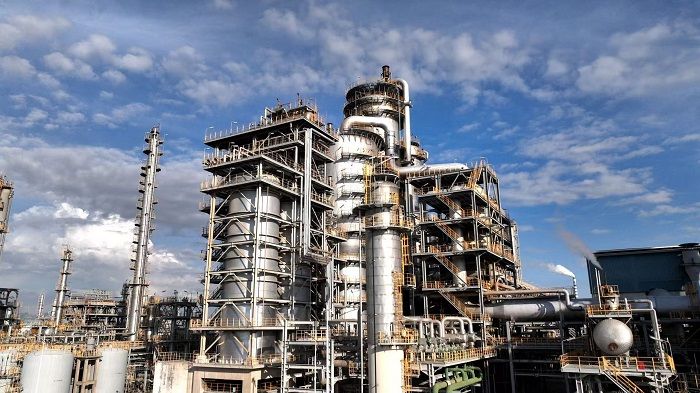
A specialized team quickly assembled and initiated a comprehensive technical investigation. They tested and evaluated the efficiency, adaptability, and economic performance of the three mainstream technologies - ejector type, spray type, and membrane type heat exchangers - on key indicators such as heat recovery efficiency, compatibility, and cost-effectiveness. Eventually, they settled on the ejector type technology - it not only has high heat recovery efficiency but also features a simple structure, easy installation, and small footprint, perfectly adapting to the space requirements of the factory. Once the direction was determined, the team was determined to go further: using the swirling non-equilibrium state heat transfer process, they would create a revolutionary swirling power head, completely cracking this tough nut.
The path of innovation is far more challenging than imagined. The integration of swirling process and ejector technology has become the first major obstacle in front of us. The most crucial aspect, the efficient separation of non-condensable gases, is the core difficulty that directly determines the life and death of the system - under conventional thinking, the separation efficiency and system stability could never be balanced. There are increasingly louder doubts in the industry: "Adding new technologies will only increase costs and is purely a waste of effort!" These voices weigh heavily on everyone's hearts, but the team did not back down; instead, they pushed themselves to be more rigorous. Every parameter was repeatedly calculated, and every plan was verified multiple times, determined to find an efficient and economical solution to break through the deadlock.
To overcome the bottleneck of separation, the team entered the laboratory and embarked on a "trial-and-error marathon". The first several sets of plans encountered repeated failures. Either the separation was not thorough, causing system fluctuations, or the energy consumption soared, going against the original intention of energy conservation. Everyone conducted experiments during the day and recorded data, and gathered around at night to review and analyze, often discussing until late at night. After dozens of iterations of the plans and countless adjustments of parameters, they finally developed the first-of-its-kind "third-order energy absorption + micrometer-level bubble pulverization" technology, successfully breaking through the bottleneck of low-pressure exhausted steam mass transfer and achieving efficient separation of non-condensable gases.
However, new problems emerged one after another, and the two major pain points of cavitation and corrosion resurfaced: During high-temperature water transportation, the water pump frequently showed signs of cavitation, and the equipment faced a serious risk of corrosion during long-term operation. The team divided into two groups to tackle the problems. One group repeatedly optimized the design of the system flow path and tested different protective measures to finalize an accurate cavitation prevention plan; the other group integrated material and engineering wisdom and finally used a "double barrier" of physical protection with 304L stainless steel and pH dynamic regulation to achieve a systematic breakthrough in corrosion prevention, and both major problems were subsequently overcome.
After the core technology was implemented, the team worked tirelessly to optimize the economic and safety aspects. They stayed up late to build analysis models, detailed each investment and return, and accurately determined the investment recovery period. At the same time, they created a three-level interlocking intelligent system of "pressure - liquid level - pump group" to achieve millisecond-level fault response, aiming to define new industry safety standards.
After numerous iterations and rigorous tests, the exhausted steam recovery system, integrating three core innovations, has finally come into operation. On the day of its commissioning, everyone was closely watching the monitoring screens: the heat recovery efficiency remained stable at 100%, the non-condensable gases were completely separated, the water pumps operated smoothly without cavitation, and the corrosion rate was far lower than the industry average! This system not only solved the problems of Dongfang Petrochemical but also provided an offshore oil industry solution for low-grade residual heat recovery, adding a significant weight to the offshore oil green brand.
When the news was released, the industry was in shock. The vortex technology has re-established the contract between industry and nature with "zero emissions, zero corrosion, and positive benefits", achieving an annual economic benefit of 18.5 million yuan and reducing CO₂ emissions by 1920 tons. This demonstrates the growth potential of green genetic technology in the industrial field. With 100% recycling efficiency, significant carbon reduction results, and low-cost investment advantages, it has become the core solution that many petrochemical enterprises are competing to introduce. When peers come for inspection, they are all amazed by the innovative courage of Dongfang Petrochemical, and have a deeper understanding of China National Offshore Oil Corporation's concept of "green low-carbon and sustainable development".
"Not only did we solve the industry's problems, but we also made the green and low-carbon brand of the oil company more widely known and recognized by more people." The team spoke with pride. Now, the "white dragon" above the Eastern Petrochemical plant has vanished, and this technology has been implemented in many enterprises, reducing carbon emissions by tens of thousands of tons each year and generating economic benefits of tens of millions. It not only pointed out the direction for the green and low-carbon transformation of the petrochemical industry, but also made the commitment to "cooling the Earth" take root, becoming the "YHO model" of green transformation in the petrochemical industry.
From a factory to a leader in the industry, Dongfang Petrochemical has used technology as a sharp tool to overcome industry challenges and has taken practical actions to contribute to the realization of the country's "carbon neutrality" goals. This solid achievement not only demonstrates the responsibility of the oil company but also turns the resolute vow of "Green Sea and Sincere Heart, Serving the Country with Energy" into a shining green brand logo, injecting lasting impetus for the harmonious coexistence of industry and nature.