
Hydrogen production equipment through water electrolysis has been included in the national special energy conservation supervision. The purification of hydrogen gas is facing favorable developments in terms of upstream standardization.
On May 13th, the Ministry of Industry and Information Technology officially issued the "Notice on Organizing the 2026 Annual Industrial Energy Conservation Supervision Work". In the category of energy efficiency supervision of key industrial chains, hydrogen production equipment through electrolysis was included in the national special energy conservation supervision scope for the first time. At the same time, it focused on areas such as photovoltaic modules, wind turbine units, power and energy storage batteries, and carried out special verification work on energy consumption during the production process and energy efficiency of core products for key enterprises in key links such as raw material supply, production manufacturing, and terminal assembly.
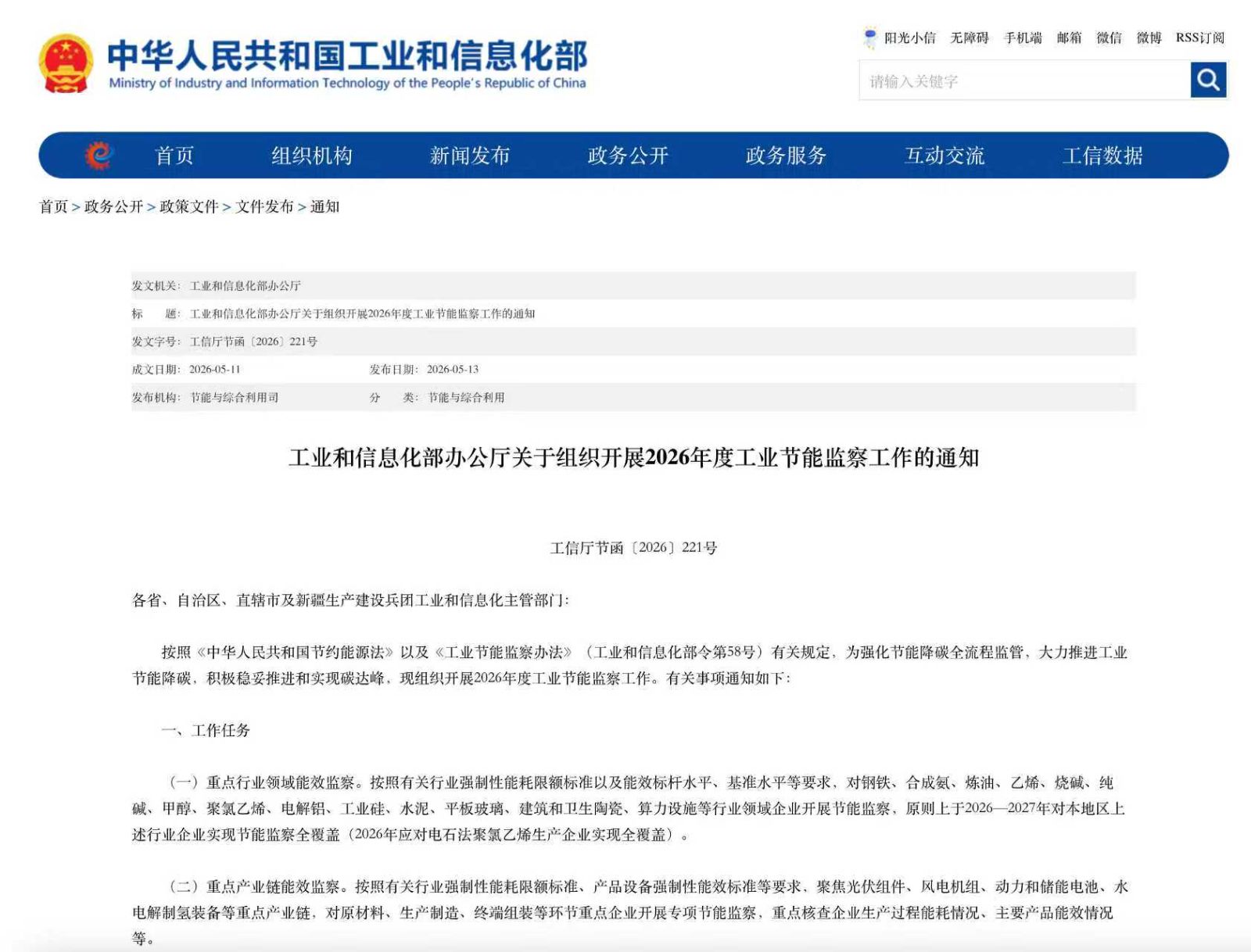
Picture / Notice on Industrial Energy Conservation Supervision Work
The inclusion of this hydrogen production equipment through electrolysis in the national-level energy conservation supervision is a significant indicator of the implementation of standardized and regulated supervision at the national level for the upstream section of the hydrogen energy industry. It will have a profound impact on the healthy and orderly development of the entire industry chain, and especially bring long-term positive benefits to the downstream hydrogen purification industry.
From the perspective of industrial development, the implementation of this policy has released multiple positive effects. Firstly, the energy efficiency of upstream hydrogen production equipment will be subject to rigid constraints. High-energy-consuming and low-energy-efficiency outdated equipment will be accelerated for elimination, forcing the hydrogen production process to upgrade technology and comprehensively improving the overall energy utilization efficiency of the hydrogen energy industry chain, laying a solid foundation for green hydrogen production. Secondly, the regulation and standardization of the upstream hydrogen production process will be further advanced, which will further stabilize the quality of hydrogen supply and the controllability of the source, providing more high-quality and stable raw gas sources for downstream hydrogen purification enterprises, and helping to improve the quality and efficiency of the purification process. Thirdly, the notice clearly stipulates the exploration of applying the results of energy-saving supervision to the carbon emissions and product carbon footprint accounting of enterprises. High-energy-efficiency hydrogen production and purification processes may form competitive advantages in the carbon accounting level in the future, helping the downstream application end to effectively respond to the challenges of international trade carbon barriers.
Overall, by implementing energy-saving supervision regulations to regulate the upstream hydrogen production industry, it will promote the transformation of the hydrogen energy industry from scale expansion to quality and efficiency improvement, and force the industry to achieve survival of the fittest. For enterprises deeply engaged in hydrogen gas purification, the standardized development of the upstream sector has opened up a space for high-quality development. We will continue to rely on our core purification technology, follow the industrial policy guidance, and with efficient and low-carbon purification solutions, help the hydrogen energy industry achieve green and high-quality coordinated development.